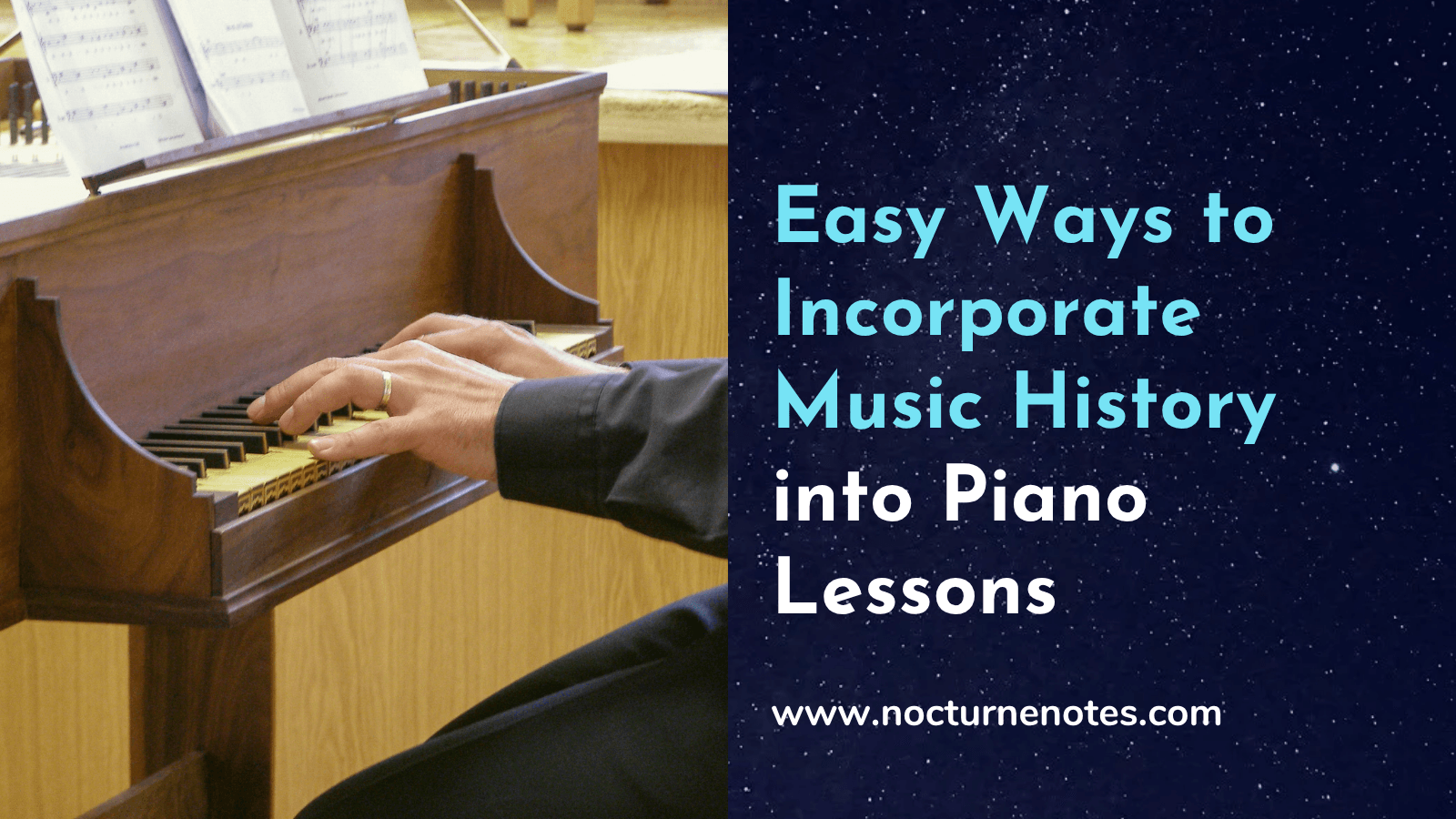
I’m breaking down 3 strategies for piano teachers to easily incorporate music history in piano lessons.
#1. Teach Music History in Piano Lessons in Context
Connect the composer and their music to the world they lived in. What was their life like, how long ago did they live? Did the Piano exist at the time period they were composing, or was the music written for another instrument like Harpsichord?
Back when I was still a student, I remember one of my fellow students comparing our progress to Mozart. That is, we were well “behind” Mozart. Our music teacher’s response was that Mozart didn’t have Netflix!
For example: Beethoven was born in 1770 - towards the end of the 18th Century. Context for UK students could be that the King at the time was Queen Victoria’s Grandfather. Context for US students could be that this was before the country as we know it today was founded! He was born around 100 years before homes were starting to get electricity.
#2. Compare & Contrast Music
This teaching strategy is useful for both learning history and how music has developed, but also for how to interpret pieces your student is learning. Try comparing pieces of music from different time periods, e.g. compare some “Absolute” Classical music to some Romantic “Programme” music. Talk about the similarities and differences, and how that can be applied to our playing.
You can also compare different recordings of the same piece of music to reinforce the idea that although there are historical traditions for how to play certain things, there is no real right or wrong in music. For example, do you use the pedal while playing Bach?
For example: Listen to, or play, J.S. Bach Prelude in C major (BWV 846). It was published in 1722 - does it sound 300 years old? Analyse the chords together, compare them to chords used in a pop song your student is familiar with.
#3. Share Composer Fun Facts
Transform the composer from just a name on the page to a real person by sharing some of their personality. The facts I remember tend to be ones that are humorous in some way, so I like sharing those with my students (obviously you have to pick and choose based on your students’ age!)
For example: Mozart wrote the Overture to his opera Don Giovanni on the morning of it’s premiere! (And he was very likely hungover too - having attended a party the night before!)
If you need some reliable information about composers, try looking them up on the Encyclopedia Britannia.
#4: Bonus! Download the “The 3 B's of Classical Music”
Wow, you made it (nearly) all the way to the end. You deserve a cookie and my free e-book: The 3 Bs of Classical Music.
Click here to download a printable PDF with two handy worksheets to introduce your students to ‘The Three B’s of Classical Music’ (J.S. Bach, Beethoven and Brahms), along with suggestions for three of their pieces to listen to and discover some features of Baroque, Classical and Romantic music.
Level up your piano lessons with the “Intro to Music History Pack”
Take your students on a tour through Classical music history from the Baroque Period to Contemporary Classical music!
This done-for-you pack of resources is everything you need to introduce your students to the history of Classical music. Teach them about composers from the period, the style of music, listen to some of the famous pieces and then they get to play a piece for themselves!
Get your copy here: https://shop.nocturnenotes.com/b/lKODW
Over to you
I hope this post showed you that it’s very simple to incorporate some music history facts into your Piano lessons. It can be an opportunity to introduce musical styles to your student for the first time. And it can also help inform how to interpret Piano music. It’s an important thing to include in your teaching! Even if you just briefly touch on the historical context when you first assign a piece to a student.
So now I want to turn it over to you. Which of these strategies will you be trying first?
Let me know by leaving a comment below!
0 Comments